
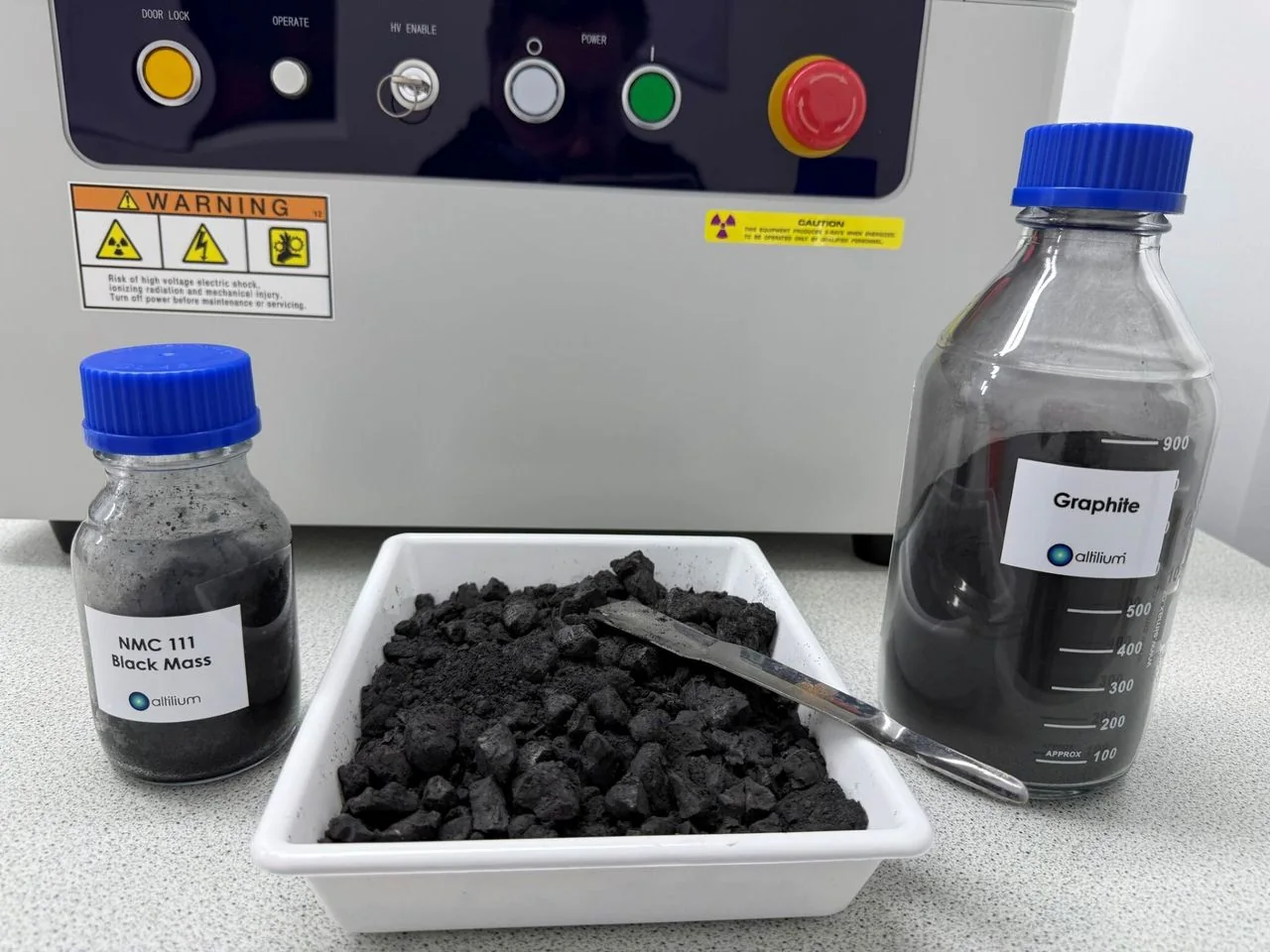
The British company’s EcoCathode hydrometallurgical process is designed to recover battery-grade materials from used EV batteries and return them to new cell production.
Key facts
- The UK patent protects Altilium’s EcoCathode hydrometallurgical recycling process.
- The process treats black mass from end-of-life batteries and aims to produce battery-grade materials for new cells.
- Altilium operates research and pilot facilities and says a larger demonstration plant is expected in 2027.
- Its planned ACT4 facility is intended to process the equivalent of 150,000 EV batteries annually and supply over 20% of UK cathode-active-material demand by 2030.
From waste battery to new raw material
When an EV battery reaches the end of its first life, it can be dismantled and processed into a mixture known as black mass. This material contains valuable metals and graphite, but it must be separated and purified before it can return to battery manufacturing.
Altilium’s patented EcoCathode route uses hydrometallurgical processing to recover these materials at battery-grade quality. The objective is a closed loop in which resources from old batteries become feedstock for new ones.
Why a domestic recycling chain matters
Europe and the United Kingdom import much of the material needed for lithium-ion cells. Recovering nickel, lithium, cobalt and graphite from used batteries can reduce dependence on primary mining and overseas supply chains.
Local recycling also reduces the volume of hazardous waste and can lower the transport and carbon burden associated with moving raw materials across long distances. Actual environmental performance still depends on energy use, recovery rates and plant operation.
Development from laboratory to industrial scale
The company’s ACT1 research centre supports process development, while the ACT2 pilot line is described as capable of handling roughly one EV battery per day. A larger ACT3 demonstration facility is expected in 2027.
Altilium says its planned ACT4 plant could eventually process material equivalent to 150,000 electric-car batteries per year and provide more than one fifth of UK cathode-active-material demand by 2030. These are company targets and will depend on financing, construction and feedstock supply.
Recycling completes the EV infrastructure cycle
Charging networks are only one part of the electric-mobility system. As the fleet grows, the industry also needs diagnostics, second-life applications, safe transport and industrial recycling for ageing batteries.
A dependable recycling chain can preserve valuable materials and make future battery production more resilient. It does not eliminate the need for new mining, but it can reduce the amount of virgin material required for each generation of cells.